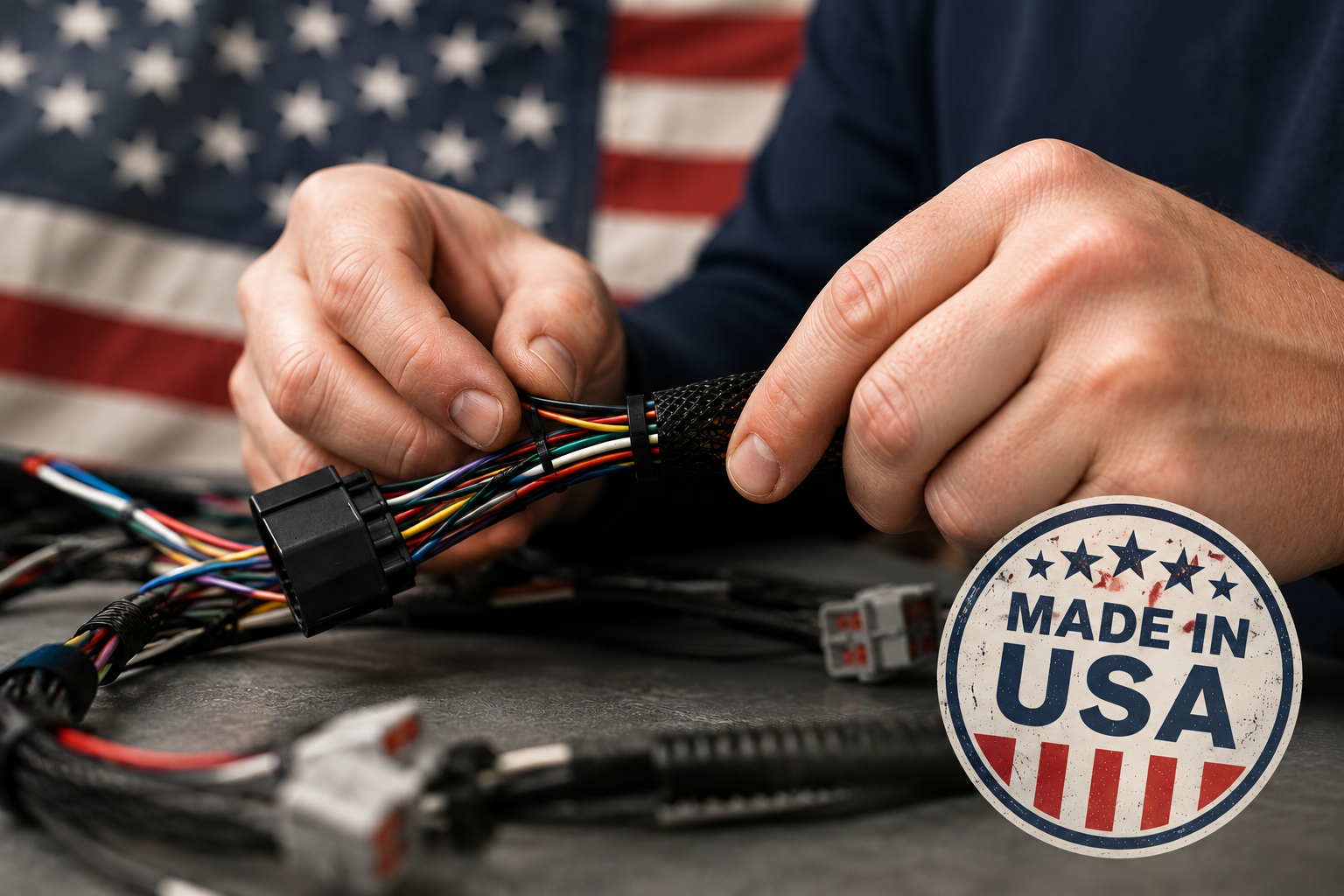

Wire harnesses are often the unsung heroes of complex systems. They power medical devices, support industrial automation, enable defense equipment, and connect critical infrastructure. Yet when a harness fails, the consequences can range from costly downtime to catastrophic system failure.
So what actually causes wire harness failure — and how can it be prevented?
1. Mechanical Stress & Vibration
The Problem:
Repeated flexing, vibration, or improper strain relief can lead to conductor fatigue, broken wires, or loose terminations. This is especially common in industrial machinery, transportation systems, and oil & gas applications.
Prevention:
-
Proper strain relief and overmolding
-
Selecting the correct wire gauge and insulation
-
Designing for bend radius requirements
-
Securing harness routing to minimize movement
Designing for the real-world environment — not just the schematic — is critical.
2. Poor Termination & Crimping
The Problem:
Improper crimps are one of the leading causes of intermittent failures. Under-crimping leads to high resistance; over-crimping damages conductors. Either can cause heat buildup and signal loss.
Prevention:
-
Calibrated tooling
-
Documented work instructions
-
IPC/WHMA-A-620 standards compliance
-
100% continuity and pull testing
Precision in termination is not optional — it’s foundational.
3. Environmental Exposure
The Problem:
Heat, moisture, chemicals, UV exposure, and abrasion degrade insulation and connectors over time. In harsh environments, this can rapidly shorten harness lifespan.
Prevention:
-
Selecting application-appropriate insulation materials
-
Sealed connectors for moisture protection
-
Overmolding or protective sleeving
-
Environmental testing during validation
Engineering for the environment dramatically increases service life.
4. Design Oversights
The Problem:
Failures often begin at the design stage — undersized conductors, incorrect current ratings, inadequate shielding, or overlooked EMI considerations.
Prevention:
-
Early collaboration between design engineers and manufacturers
-
Design for manufacturability (DFM) review
-
Electrical load analysis
-
Shielding and grounding strategy validation
A proactive design review can eliminate many failure risks before production begins.
5. Inadequate Testing
The Problem:
Skipping thorough inspection and testing allows small defects to become large failures in the field.
Prevention:
-
100% continuity testing
-
Hi-pot and insulation resistance testing (when applicable)
-
Visual inspection of terminations and routing
-
Documented quality processes under ISO-compliant systems
Quality verification is the final safeguard.
Conclusion:
Wire harness failures rarely stem from a single cause. More often, they are the result of cumulative stress, overlooked design details, or inconsistent manufacturing practices.
Preventing failure requires:
-
Thoughtful engineering
-
Application-specific material selection
-
Controlled manufacturing processes
-
Comprehensive testing
Reliability doesn’t happen by accident — it’s engineered from the start.